
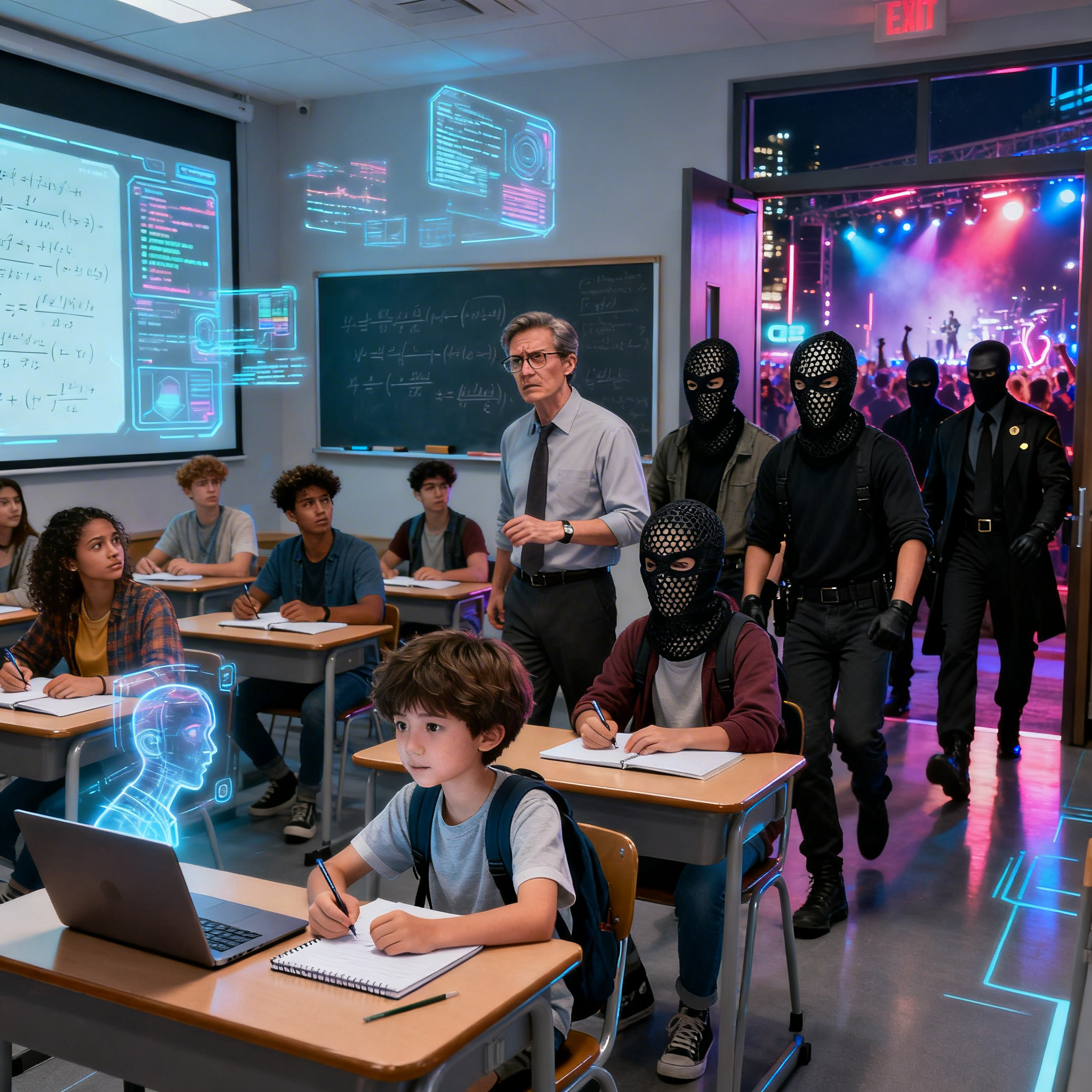
I dreamed I was enrolled in a prestigious and highly advanced entrepreneurship program. The atmosphere was intellectual and competitive — filled with professional students from around the world, the kind of people who exuded intelligence, confidence, and ambition. The classrooms were sleek and high-tech, each one humming with focused energy. When I first sat down, I noticed the person beside me was my childhood friend, Mel. He was quietly taking notes like everyone else — serious, disciplined, immersed in the material. It was strange but comforting to see a familiar face in such a challenging environment. One of our lectures focused on advanced mathematics — dense equations and symbols filling the whiteboard at dizzying speed. The teacher taught as if the class was made up of universal prodigies, writing line after line of algebra without explanation or pause. Everyone else seemed to keep up, their pens flying across notebooks as they copied formulas, but I found myself struggling to stay engaged. Instead of forcing myself to focus, I opened my laptop and decided to watch a different lecture — a video by Andrew Tate, the controversial entrepreneur. I thought it might be more stimulating since it connected directly to real-world business. But soon, my wireless headphones died, and his loud, unmistakable voice suddenly filled the classroom. Heads turned; students recognized the voice. The teacher stopped, visibly annoyed. After class, she pulled me aside and told me the disruption was unacceptable. I spoke honestly, explaining that I found it difficult to stay attentive to lectures that raced through complex material without connection to real practice. I said I preferred learning from someone actually living the entrepreneurial experience. Surprisingly, she appreciated my honesty. She encouraged me to still participate fully, but I could tell she respected my openness. The next session blended classroom learning with hands-on projects. The students were assigned to work with real businesspeople on live ventures — a mix of theory and reality. My group’s mentor was a sharp, confident businessman. He handed me a list of companies to contact, gave me a professional-looking document with details, and explained my role. He expected me to make calls, set up connections, and represent the program. I felt both nervous and proud — like I was stepping into something significant. But then, tension filled the room. A handful of students were suddenly “eliminated” from the program. It happened without announcement or explanation. Each one who was dismissed had a black mesh mask placed over their head — resembling the kind used in fencing, opaque and intimidating. Then large men wearing identical masks entered the room, lifted the eliminated students by their arms, and escorted them out. There was no resistance, no protest — only an eerie silence as the rest of us watched. It felt authoritarian, as if the program was testing not only knowledge but loyalty, obedience, or conformity. I realized this wasn’t just a school — it was a system with hidden rules. My next lecture was taught by a Japanese professor. He didn’t teach from the front of the room like everyone else — instead, he stood at the back, using red markers instead of blue. The atmosphere shifted: structured yet strangely personal. I sat in the front this time, cracked jokes in Japanese, and greeted him with a lighthearted “Ohayō” when he said “Hai.” He laughed warmly, pleased by my participation. The energy between us was playful, and the class felt alive compared to the earlier ones. Yet soon, the same pattern returned — the complicated algebra, endless writing, fleeting comprehension. I tried to keep pace as rows of symbols multiplied across the board, knowing that if I hesitated even for a moment, he would erase them. A quiet anxiety grew in me: What will happen when we take the exam? But I forced myself to let it go and focus instead on the human connection, the rhythm of participation, and the teacher’s appreciation of my engagement. When the class ended, I felt drained but intrigued. I walked through city streets at night, heading home. The atmosphere shifted again — cool air, glowing streetlights, and the pulse of something happening nearby. I followed the sound of distant music and found a lively concert taking place in an open venue. People were streaming in, vibrant and alive. On impulse, I decided to go in, even though I didn’t have a ticket. There was no one checking at the door, no security, no barriers — so I slipped inside. I took an empty seat, watching the lights and listening to the music vibrating through the air. But before long, someone approached and informed me that I was in their seat. I moved, tried another spot, but the same thing happened again. It turned into a game of musical chairs — nowhere to belong, always having to move. Realizing the futility, I decided to leave. As I exited, I passed a tall doorman standing by the door. He was imposing yet elegant, wearing a long black coat that fell to his ankles and a captain’s-style hat. His presence was commanding and mysterious — like a gatekeeper between worlds. He gave me a courteous nod as I walked by, and I stepped back into the night, feeling both excluded and strangely liberated, as though the whole experience had been a test I was never meant to pass.
Your dream depicts a complex interplay between ambition, personal identity, expectations, and the tension between structured learning environments and individual learning preferences. Here is a detailed interpretation of the various elements within your dream:
The Prestigious Entrepreneurship Program:
The Presence of Your Childhood Friend, Mel:
The Advanced Mathematics Lecture:
The Experience with Andrew Tate:
The Professor's Reaction:
The Hands-On Project:
The Elimination and Black Masks:
The Unconventional Japanese Professor:
Musical Chairs at the Concert:
The Doorman at the Exit:
Overall Dream Interpretation: This dream intertwines aspects of educational advancement, personal growth, and finding one’s personal method of learning and connecting with the world. It suggests a pursuit for balance between societal expectations and staying true to your individual learning styles and ideals. The scenes work together to propose a broader understanding of progress not just in terms of compliance, but personal evolution and authenticity.